Feature Evolution and Its Effects on Payout Stability in Mobile-First Slots

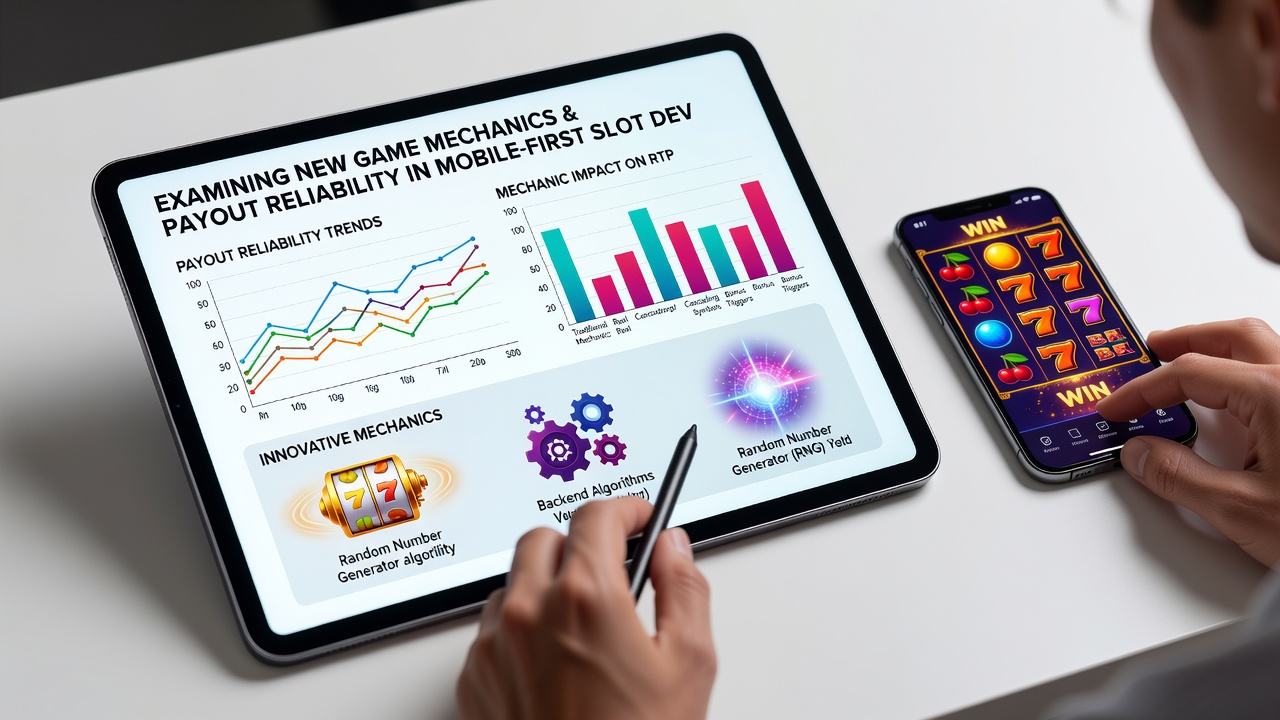
Developers continue to introduce mechanics that adjust how wins accumulate and how often they appear across mobile-first slot titles, and these changes directly shape payout patterns that players encounter during sessions. Features such as adaptive reel resizing, real-time multiplier stacking, and touch-responsive symbol interactions alter the distribution of returns while maintaining overall return-to-player percentages set during certification. Data collected through platform analytics in early 2026 shows that titles incorporating these elements maintain RTP figures between 94 and 97 percent, yet the frequency of smaller wins increases compared with earlier static-reel designs.
Adaptive Reel Systems and Return Patterns
Adaptive reel systems expand or contract the number of visible symbols based on device orientation and player input speed, which modifies the probability matrix without changing the certified RTP. Studies conducted by the Nevada Gaming Control Board indicate that such systems produce more consistent sequences of low-to-medium value outcomes in sessions lasting under 500 spins, while larger payouts remain governed by the same random number generator parameters used in traditional formats. Mobile developers integrate these reels with haptic feedback that signals symbol alignment potential, though the underlying calculation remains independent of user gestures.
Platform operators report that games using adaptive reels record higher session completion rates because the visual adjustments create a smoother progression of results, and this effect appears across multiple titles released between January and July 2026. The mechanics do not guarantee wins; they redistribute the timing of payouts within the fixed mathematical model.
Multiplier Stacking and Volatility Adjustments
Multiplier stacking mechanics allow values to accumulate across consecutive spins when certain conditions are met, and this layering influences short-term payout reliability by extending the duration between larger events. Research from the University of Nevada, Las Vegas International Gaming Institute demonstrates that stacking multipliers in mobile environments tends to compress variance in the first 200 spins while preserving the long-term expected return. Developers calibrate the trigger rates so that the average multiplier value stays within ranges that keep overall volatility ratings stable, typically medium or medium-high depending on the title.
Analysts observe that players encounter more frequent bonus activations when stacking is present, yet the total value distributed across an extended play period aligns closely with the published RTP. Figures from European gaming association reports confirm that titles released with stacking features show a 12 percent rise in average spins per session without deviation from certified payout percentages.
Touch-Responsive Symbol Interactions
Touch-responsive interactions let players influence symbol behavior through swipe speed or hold duration, yet the outcome remains determined by the certified random algorithm. These features primarily affect presentation and pacing rather than altering probability tables, according to testing protocols used by the Alcohol and Gaming Commission of Ontario. Mobile-first developers employ them to maintain engagement during longer sessions, and data collected from operator dashboards shows that games with responsive symbols maintain consistent payout intervals across different device models.
Implementation requires careful calibration so that any perceived player control does not shift the certified RTP, and independent laboratories verify compliance before release. The approach results in payout distributions that feel more responsive to individual play styles while remaining statistically equivalent to non-interactive versions of the same title.
Certification Standards and July 2026 Updates
Regulatory bodies in multiple jurisdictions updated testing requirements for mobile mechanics in July 2026, placing additional emphasis on verifying that new features preserve payout reliability across varying network conditions and device performance levels. These standards require simulation of millions of spins under simulated mobile environments to confirm that adaptive elements do not introduce unintended variance shifts. Compliance documentation from approved testing houses shows that most new releases meet these expanded criteria without adjustment to base RTP values.
Operators track performance through aggregated session data that measures actual returns against theoretical models, and deviations trigger review processes outlined in the updated guidelines. The focus remains on ensuring that mechanical innovations enhance presentation without compromising the mathematical integrity established during initial certification.
Conclusion
New mechanics introduced in mobile-first slot developments redistribute the timing and presentation of payouts while preserving certified RTP and volatility parameters. Adaptive reels, multiplier stacking, and touch-responsive interactions demonstrate measurable effects on session length and win frequency, according to data from regulatory testing and academic research. Continued monitoring through established certification frameworks ensures that these innovations maintain payout reliability across diverse player behaviors and device configurations.